
Speak With Our Team Today
212-460-0047
Supreme Court Ruling Lets Workers Avoid Arbitration
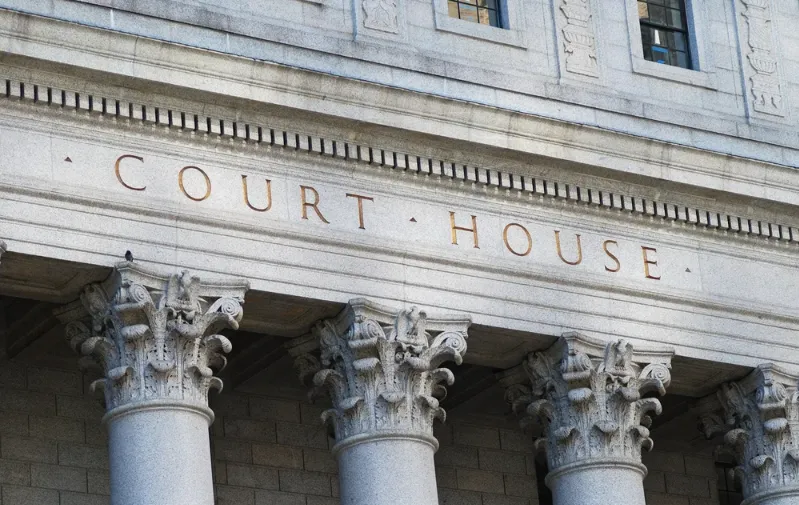
The Supreme Court’s ruling in Bissonnette’s lawsuit against LePage Bakeries is part of an ongoing tug-of-war between worker rights and business interests. Here’s a brief overview of the situation, the ruling, and how it affects transport workers.
Ruling in Favor of Transportation Workers
On April 12, 2024, the US Supreme Court issued a unanimous decision in the case of Bissonnette v. LePage Bakeries that could significantly impact the way transportation workers resolve workplace disputes. The Court’s ruling broadens the scope of the Federal Arbitration Act (FAA) exemption for transportation workers engaged in interstate commerce. This means more delivery drivers, truck drivers, and other transportation-related employees will now have the option to pursue class-action lawsuits in court rather than being bound by mandatory arbitration agreements included in their employment contracts.
Prior to this decision, there was a disagreement among lower courts about how broadly to interpret the FAA’s exemption. The question centered on whether the exemption applied only to workers directly employed by transportation companies or if it encompassed a wider range of workers involved in the movement of goods across state lines. The Supreme Court’s decision in Bissonnette clarifies this ambiguity.
Understanding the Federal Arbitration Act
The FAA, enacted in 1925, generally supports the enforcement of arbitration agreements as a means of dispute resolution. Arbitration is a private process in which parties to a dispute agree to have a neutral third party (an arbitrator) resolve the matter instead of going to court. Arbitration is often touted as a cheaper and more efficient alternative to traditional litigation, but is also perceived by many as more business-friendly than court. For that reason, workers frequently prefer to litigate rather than arbitrate their employment disputes.
Some such workers look to the FAA exemption for “contracts of employment of seamen, railroad employees, or any other class of workers engaged in foreign or interstate commerce.” This exemption has been the subject of much debate and litigation as courts have tried to define what constitutes a “worker engaged in… interstate commerce” for the exemption to apply and allow a worker to take a dispute to court.
The Case of Neal Bissonnette
The recent Supreme Court case involved a delivery driver, Neal Bissonnette, who worked for LePage Bakeries, a subsidiary of Flowers Foods, the maker of Wonder Bread. Bissonnette alleged that the company misclassified him as an independent contractor rather than an employee in order to avoid paying him proper wages. Due to the arbitration clause in Bissonnette’s contract, LePage Bakeries sought to compel arbitration to settle the dispute.
Bissonnette argued that as a delivery driver, he was entitled to the FAA’s transportation worker exemption from arbitration. The lower courts disagreed, siding with the bakery and holding that the FAA exemption was narrow and did not apply to workers who were not directly involved in providing transportation services.
The Supreme Court’s Decision
In a major victory for workers’ rights, the Supreme Court reversed the lower court’s decision. The Court emphasized that the plain language of the FAA does not limit the scope of the interstate commerce exemption solely to the transportation industry itself.
According to the Court, the key factor is whether a worker’s job duties constitute a class of work directly involved in the free flow of goods across state lines, regardless of their employer’s primary industry. As Chief Justice John Roberts’ opinion states, “a transportation worker need not work in the transportation industry to fall within the exemption.”
What the Supreme Court Ruling Means for Workers
The Supreme Court’s ruling is a significant win for workers’ rights, as it prevents companies from using the FAA as a shield to avoid judicial scrutiny over potentially unfair or illegal employment practices. Workers covered by the transportation worker exemption now have more leverage when negotiating contracts and greater recourse in the face of potential labor violations.
The Bissonnette case also highlights the persistent issue of worker misclassification. Companies sometimes classify workers as independent contractors to save money, because in many jurisdictions independent contractors are not covered by minimum wage or overtime laws. Delivery drivers, in particular, have been a focus of misclassification efforts and related lawsuits.
The debate over worker classification in the gig economy is ongoing, and the Supreme Court’s broadening of the FAA exemption could further embolden workers seeking to challenge their classification in court.
What the Ruling Means for Businesses
The Supreme Court’s ruling raises a number of questions and potential challenges for businesses. The case could open the doors for drivers, delivery workers, and others who frequently move goods across state lines to bring class action lawsuits.
Consulting with legal experts on how the Supreme Court’s recent decision impacts their specific business practices could be a vital step.
Ripple Effects Beyond the Transportation Industry
While the immediate impact of the Supreme Court’s ruling is on companies that employ delivery drivers or other transportation personnel, the decision has the potential to reverberate through numerous other industries. For instance, ride-share drivers for companies like Uber and Lyft, as well as food delivery workers for platforms like DoorDash and Grubhub, are often involved in the interstate movement of goods or people. This Supreme Court ruling could make it easier for those workers to band together with class action suits rather than be restricted to individual arbitration.
The effect could reach into many other professions, as well. Healthcare workers, such as traveling nurses or those transporting medical supplies across state lines, may be eligible to pursue class-action litigation under the exemption. Agriculture workers involved in the distribution of farm products across states could also be affected by the Bissonnette decision, with implications for both individual farms and large-scale agriculture companies. And in the complex supply chains that underpin manufacturing and retail, workers involved in moving resources, components, or finished goods across state borders could also potentially make use of the widened exemption.
The Bottom Line
The Supreme Court’s recent decision on the FAA’s transportation worker exemption marks a significant expansion of the rights of workers involved in the movement of goods across state lines. This ruling has the potential to reshape labor relations across multiple industries. Businesses and workers alike will need to adjust their strategies accordingly, paying close attention to the evolving legal landscape in this area.
Contact Us for Help Now
Contact Katz Melinger, PLLC, today for a consultation to discuss your specific situation. Our team of attorneys specializes in employment law and has the experience to help both businesses and workers.
Schedule Your Consultation Today
To schedule a free consultation with an attorney please fill out the form below or call our legal team today!
Fields marked with an * are required
"*" indicates required fields

Office Address
370 Lexington Ave # 1512
New York, NY 10017
Office Phone
© Copyright 2026 Katz Melinger PLLC. All rights reserved.